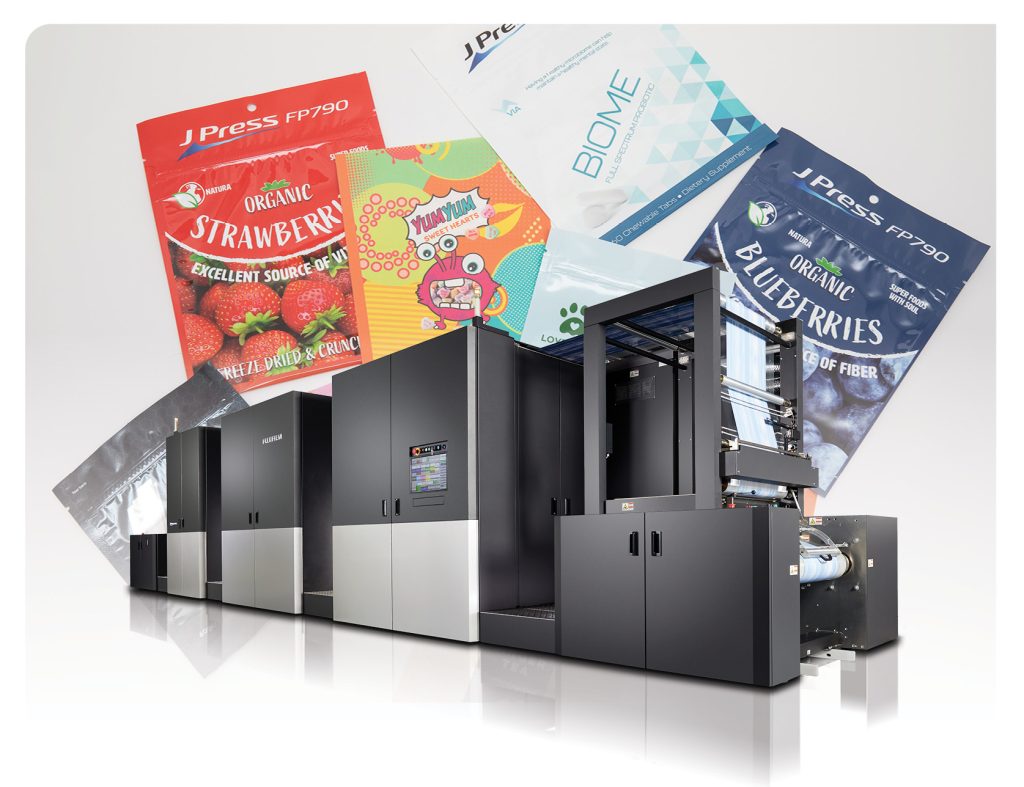
The packaging market has reached a clear inflection point. The conversations surrounding the 2025 Digital Packaging Summit in Ponte Vedra, Florida reinforced what forward-thinking converters already recognize: the gap between companies modernizing their production environments and those holding onto legacy workflows is widening at an accelerating pace.
This is no longer a discussion about trends. It is the current state of the market.
As operational complexity continues to grow, brand owners really need shorter runs, faster turnaround, higher quality, and stricter compliance. At the same time, labor shortages and regulatory pressure are forcing converters to rethink how work gets done. Incremental improvements to analog workflows are no longer enough. Digital capability has become a strategic requirement.
The Reality of Labor and Automation
One of the biggest challenges facing converters today is labor. Traditional analog printing relies on highly skilled operators who require years of experience. That is a scarce resource across the industry. So, automation is no longer just a future consideration; it is a necessity.
As Greg Horney, National Sales Manager for FUJIFILM North America Corporation’s Business Innovation Division explains, automation is not about preference or efficiency alone, it’s about survival. “Automation is coming one way or another. Embracing it isn’t about preference anymore—it’s about staying in business or not,” he notes. Technologies like the FP790 are designed to bridge the widening skills gap by simplifying production and enabling a new generation of operators to add value almost immediately, without compromising output quality.
By reducing reliance on specialized labor and shortening learning curves, digital production gives converters a practical path forward in an increasingly constrained labor market.
Compliance Without Compromise
Cost efficiency will always matter, but compliance is now a defining constraint for wide-web manufacturers operating under tightening VOC regulations. Rather than positioning digital as a replacement for analog, Fujifilm takes a more pragmatic approach.
Water-based inkjet technology allows converters to complement existing solvent-based systems without increasing VOC output or investing in larger incineration infrastructure. This enables manufacturers to profitably accept low-MOQ jobs that would traditionally be turned away, nurturing emerging brands until they are ready for larger analog runs. It is a compliance-first strategy that supports growth instead of limiting it.
Solving the Total Turnaround Problem
In packaging production, press speed is often mistaken for productivity. While analog presses may run faster on paper, total turnaround time tells a more complete story.
Horney points out that printing itself is rarely the true bottleneck. “The delay isn’t printing—it’s curing. Traditional solvent-less lamination can require 36 to 48 hours before a job can move to slitting or pouching,” he explains. By integrating digital printing with thermal lamination and workflow automation tools such as XMF Packaging and PressReady, converters can dramatically reduce end-to-end production timelines.
The result is faster speed-to-market for brand owners, which is an advantage that increasingly outweighs raw press speed in purchasing decisions.
Quality That Performs at the Shelf
For consumer-packaged goods, the first moment of truth happens at the shelf. With 1200 × 1200 dpi output, packaging produced on the FP790 is challenging long-held assumptions about what digital can deliver.
While rotogravure has historically set the quality benchmark, its high operational costs make it impractical for many of today’s run lengths. Converters are now comparing digital output directly to flexographic and solvent-based printing. They seem to be finding that digital is exceeding expectations while offering a more attractive cost of ownership.
The Path Forward
The next generation of packaging leaders will not be defined by legacy assets or incremental gains. They will be defined by their ability to adapt. Fujifilm is not reacting to the shifts. We are helping converters close the gap between where the market is today and where it is clearly headed.